Navamatch Journal
Vedic wisdom for modern love
Kundli Milan, Nakshatras, Manglik dosha and Dasha timing — explained without the jargon, for people actually looking for a partner.
 Modern Love & Indian Marriage7 Sept 202616 min read
What to Ask on the First Meeting When You’re Considering Marriage
The first meeting shouldn't feel like an interview — but it shouldn't be only small talk either. Learn what to ask when you're meeting someone for marriage, and how to discover genuine compatibility without making the conversation awkward.
 Relationship Advice5 Sept 202615 min read
12 Questions Every Couple Should Discuss Before Marriage
Compatibility is more than attraction — and more than a Kundali score. Before marriage, couples should talk honestly about money, children, careers, family, intimacy, conflict and the life they actually want to build together.
 Vedic Compatibility 1014 Sept 202613 min read
Is 18 Gunas Enough for Marriage? How to Read Your Kundli Match Beyond the Score
A Kundli match of 18 Gunas is traditionally considered a basic threshold, but it is not a guarantee of marital compatibility. Here’s how to understand the 36-Guna score without treating it as a pass-or-fail verdict.
 Vedic Compatibility 1012 Sept 202619 min read
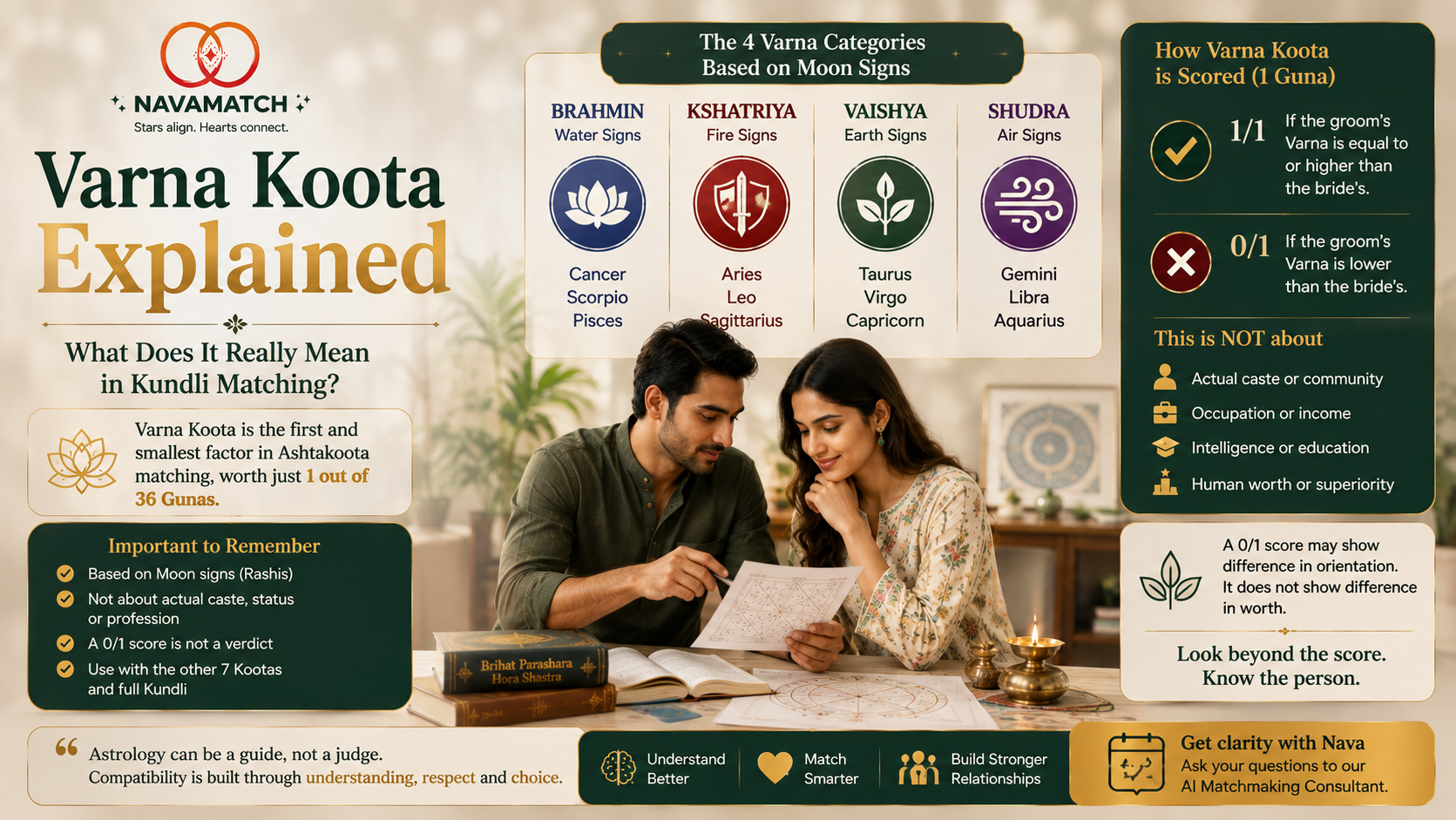
Varna Koota Explained: What Does It Really Mean in Kundli Matching?
Varna Koota is the first and smallest factor in Ashtakoota Kundli matching, carrying just 1 out of 36 Gunas. It uses the Moon sign to place each person into one of four traditional Varna categories and evaluates a specific aspect of compatibility. But the terminology can be confusing—and sometimes harmful—when it is interpreted as modern caste. Here is what Varna Koota actually measures, how it is calculated, and why a 0/1 score should rarely become a reason to reject a match.
 Vedic Compatibility 10131 Aug 202619 min read
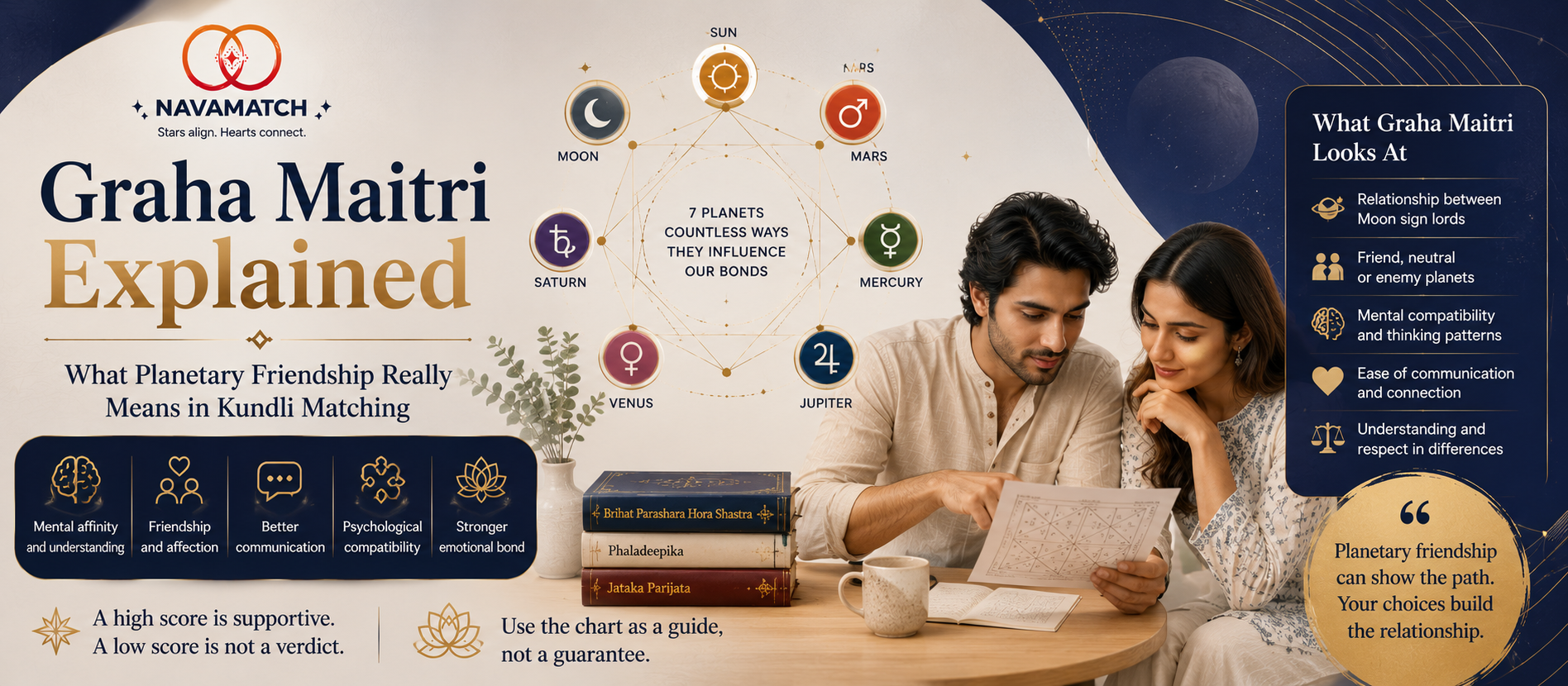
Graha Maitri Explained: What Planetary Friendship Really Means in Kundli Matching
Graha Maitri Koota is the fifth factor in Ashtakoota Kundli matching and carries 5 out of 36 Gunas. It compares the planetary lords of two partners' Moon signs and traditionally represents mental affinity, friendship and psychological compatibility. But a 0/5 score is not a verdict on a marriage. Here is what Graha Maitri actually measures, how it is scored and why planetary friendship should be interpreted in context.
 Vedic Compatibility 10129 Aug 202617 min read
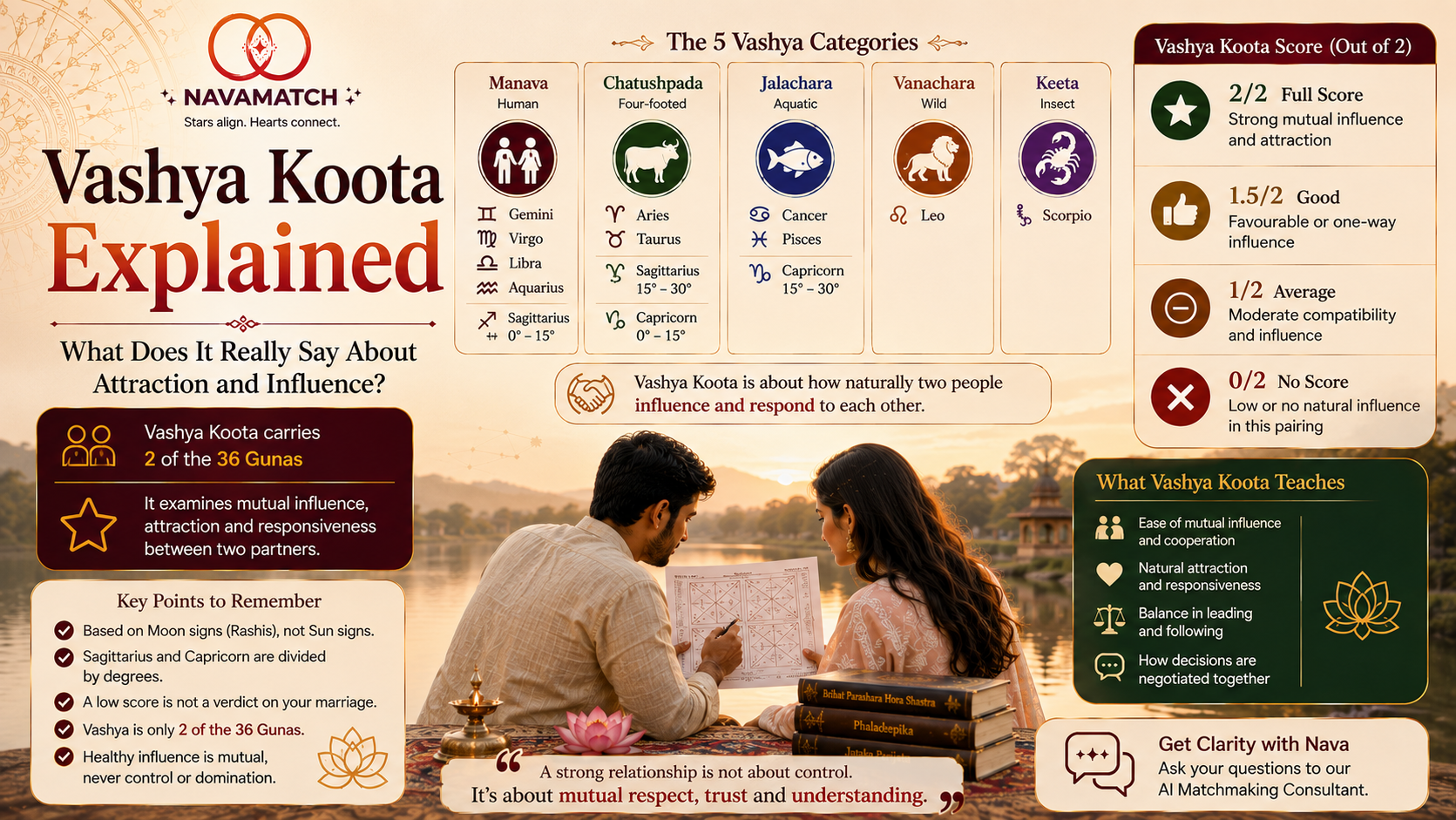
Vashya Koota Explained: What Does It Really Say About Attraction and Influence?
Vashya Koota is the second factor in Ashtakoota Kundli matching and carries 2 out of 36 Gunas. It examines the traditional relationship between the Moon signs of two people and is often described as mutual attraction, influence or control. But Vashya is frequently misunderstood. This guide explains the five Vashya categories, how the score works, why Sagittarius and Capricorn are divided by degree, and why a low score should never be interpreted as a prediction of relationship failure.
 Vedic Compatibility 10128 Aug 202618 min read
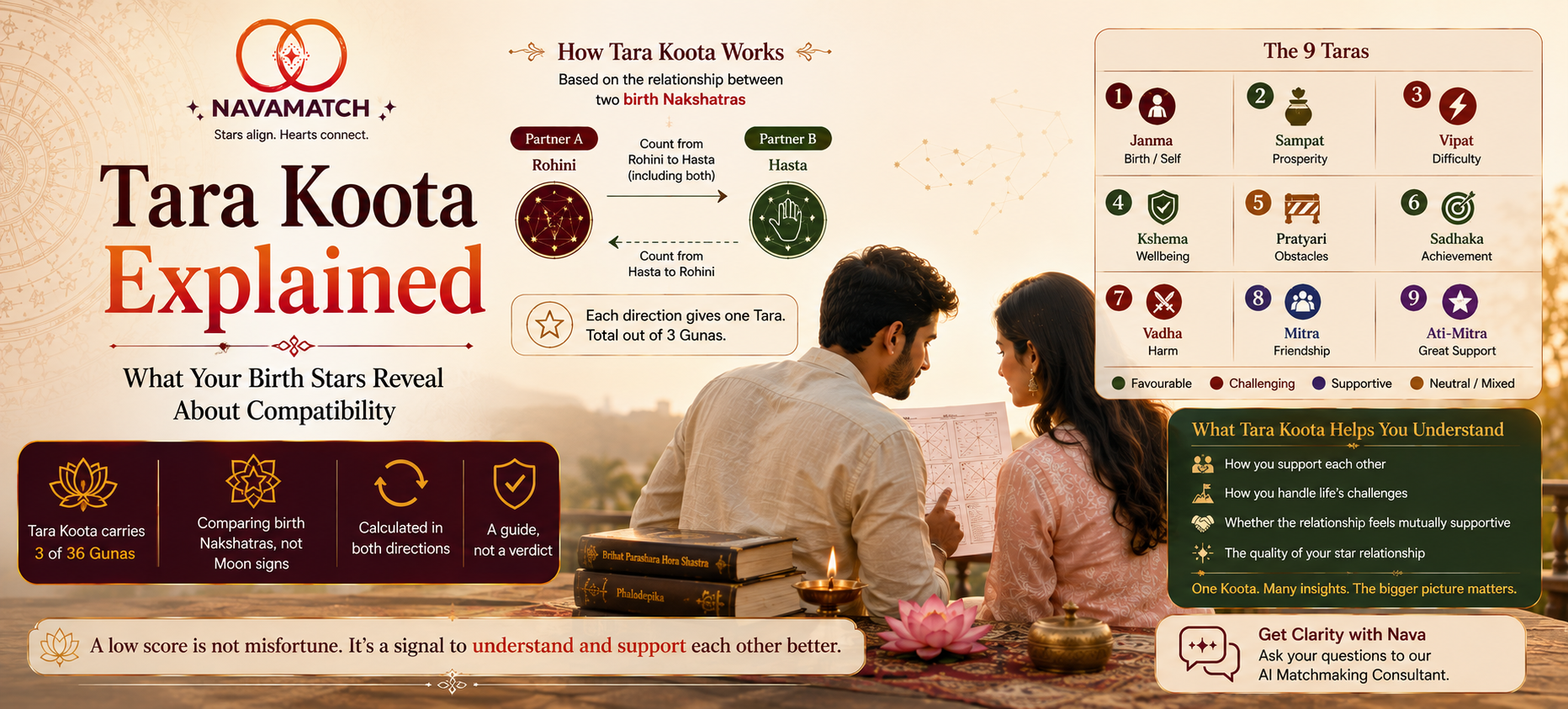
Tara Koota Explained: What Your Birth Stars Reveal About Compatibility
Tara Koota is the third factor in Ashtakoota Kundli matching and is based on the relationship between two people's birth Nakshatras. Worth 3 out of 36 Gunas, it uses a nine-fold Tara cycle to assess traditional ideas of wellbeing, fortune and compatibility. Here is how Tara Koota actually works—and why it should not be treated as a prediction of health or marital success.
 Vedic Compatibility 10127 Aug 202615 min read
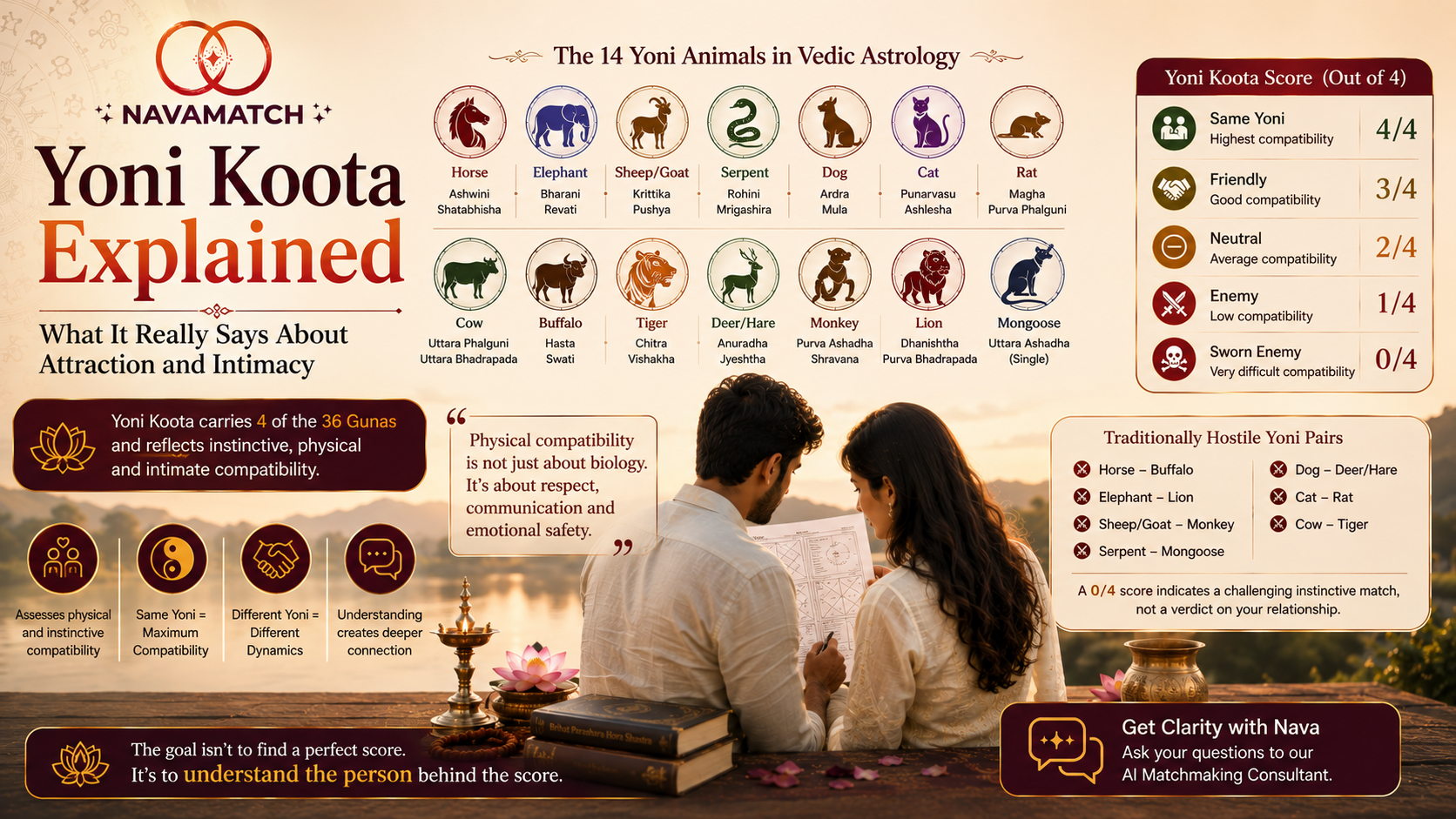
Yoni Koota Explained: What It Really Says About Attraction and Intimacy
Yoni Koota is the Ashtakoota factor most directly associated with physical and instinctive compatibility. But it is often reduced to a simplistic “sexual compatibility score.” This guide explains the 14 Yoni types, how the 4-point system works, what enemy Yonis traditionally mean, and why physical intimacy cannot be judged from one Koota alone.
 Vedic Compatibility 10125 Aug 202616 min read
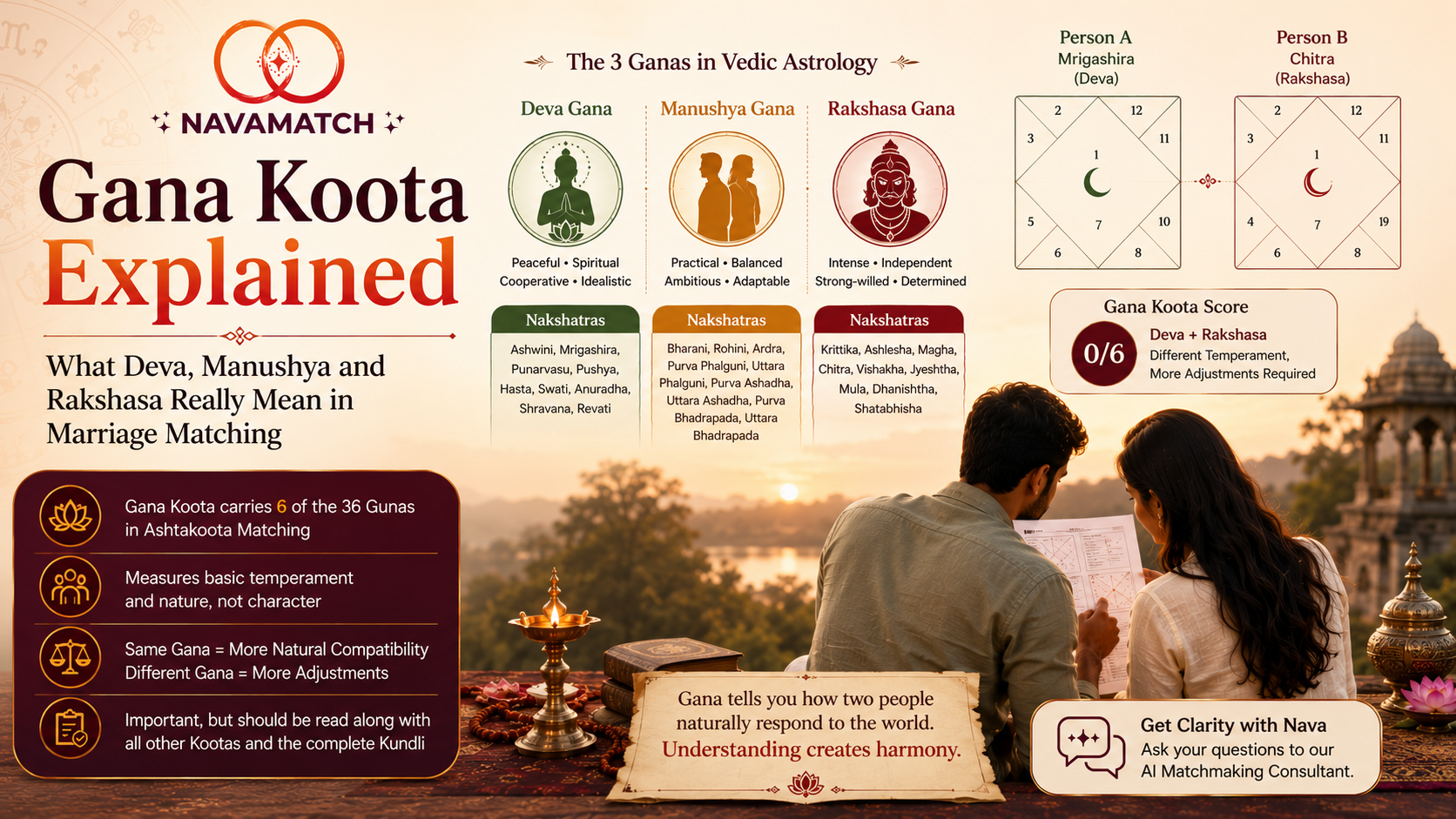
Gana Koota Explained: What Deva, Manushya and Rakshasa Really Mean in Marriage Matching
Gana Koota is one of the most misunderstood parts of Kundli matching. Learn what the three Ganas—Deva, Manushya and Rakshasa—actually represent, how Gana compatibility is scored, why “Rakshasa” does not mean evil, and what a Gana mismatch really tells you about a relationship.
 Vedic Compatibility 10124 Aug 202615 min read
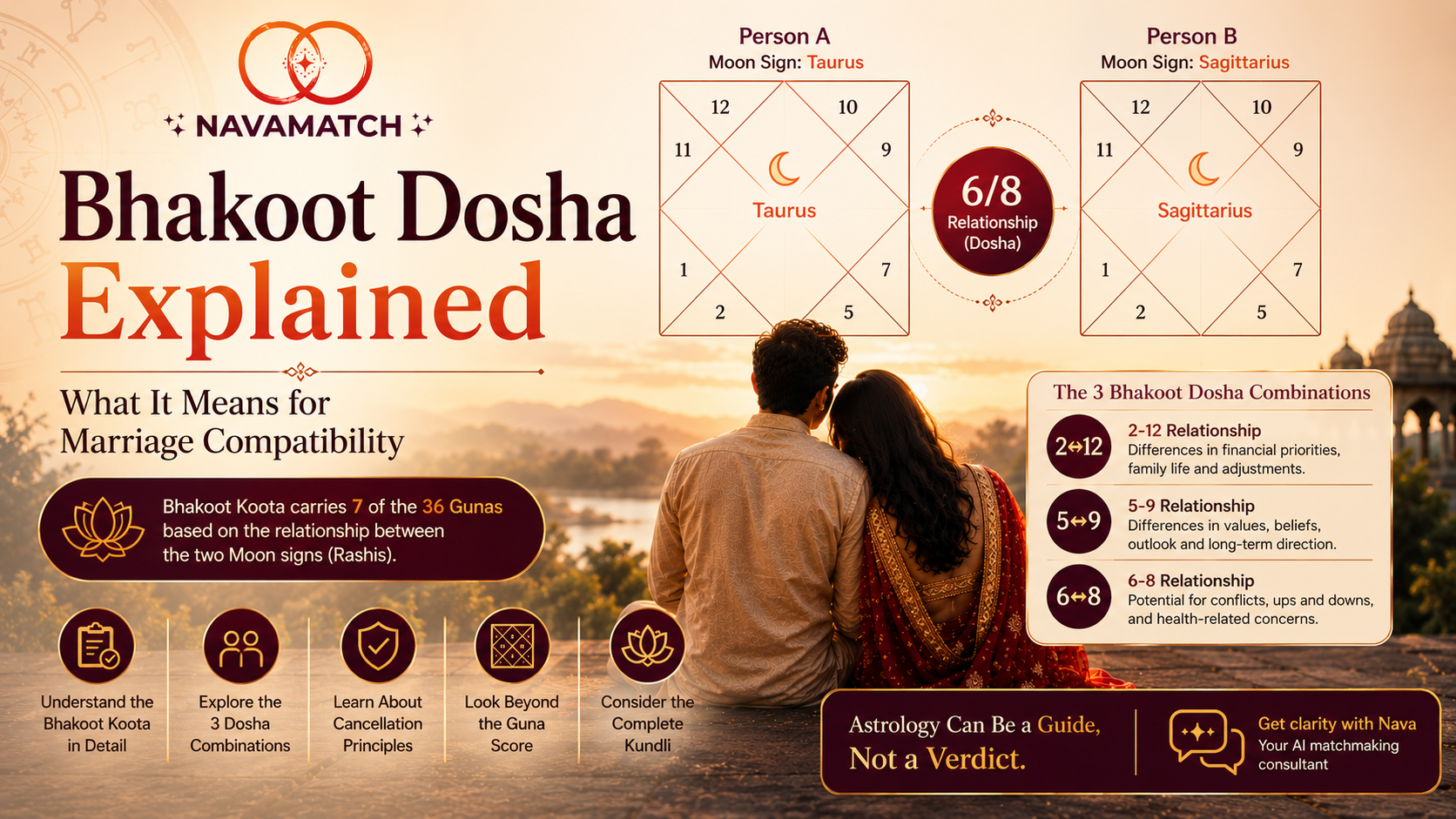
Bhakoot Dosha Explained: What It Means for Marriage Compatibility
Bhakoot Dosha is one of the most important factors in traditional Kundli matching, carrying 7 of the 36 Gunas. But what does a Bhakoot mismatch actually mean? This guide explains the three traditional Bhakoot Dosha patterns, how they are interpreted, when cancellation principles may apply, and why the complete Kundli matters more than a single score.
 Vedic Compatibility 10123 Aug 202613 min read
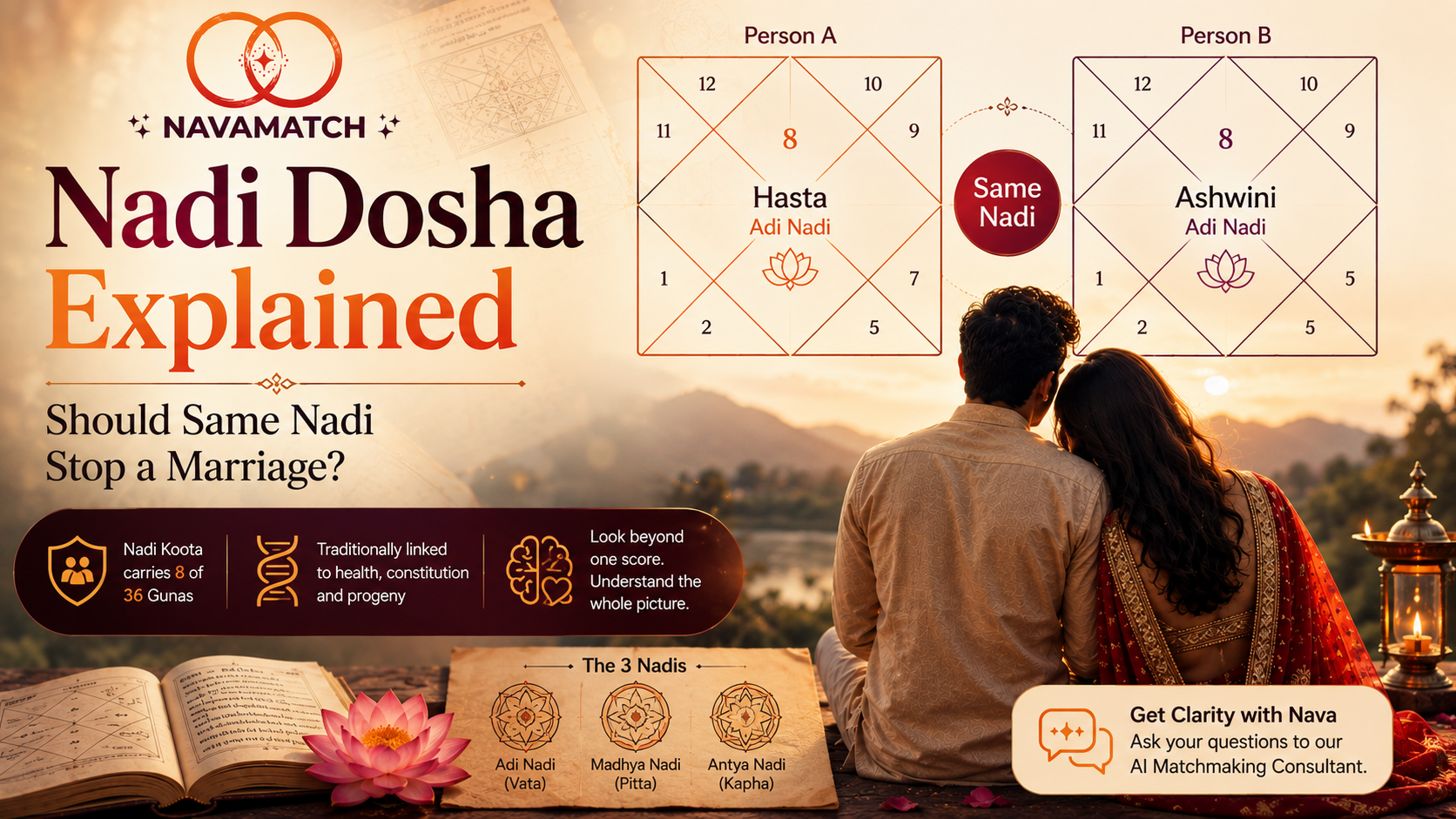
Nadi Dosha Explained: Should Same Nadi Stop a Marriage?
Nadi Dosha is one of the most feared results in Kundli matching because Nadi Koota carries 8 of the 36 Gunas. But what does same Nadi actually mean, and should it stop a marriage? This guide explains the three Nadis, how Nadi Dosha is calculated, why traditional rules matter, and why the complete Kundli deserves more attention than one score.
 Vedic Compatibility 10122 Aug 202614 min read
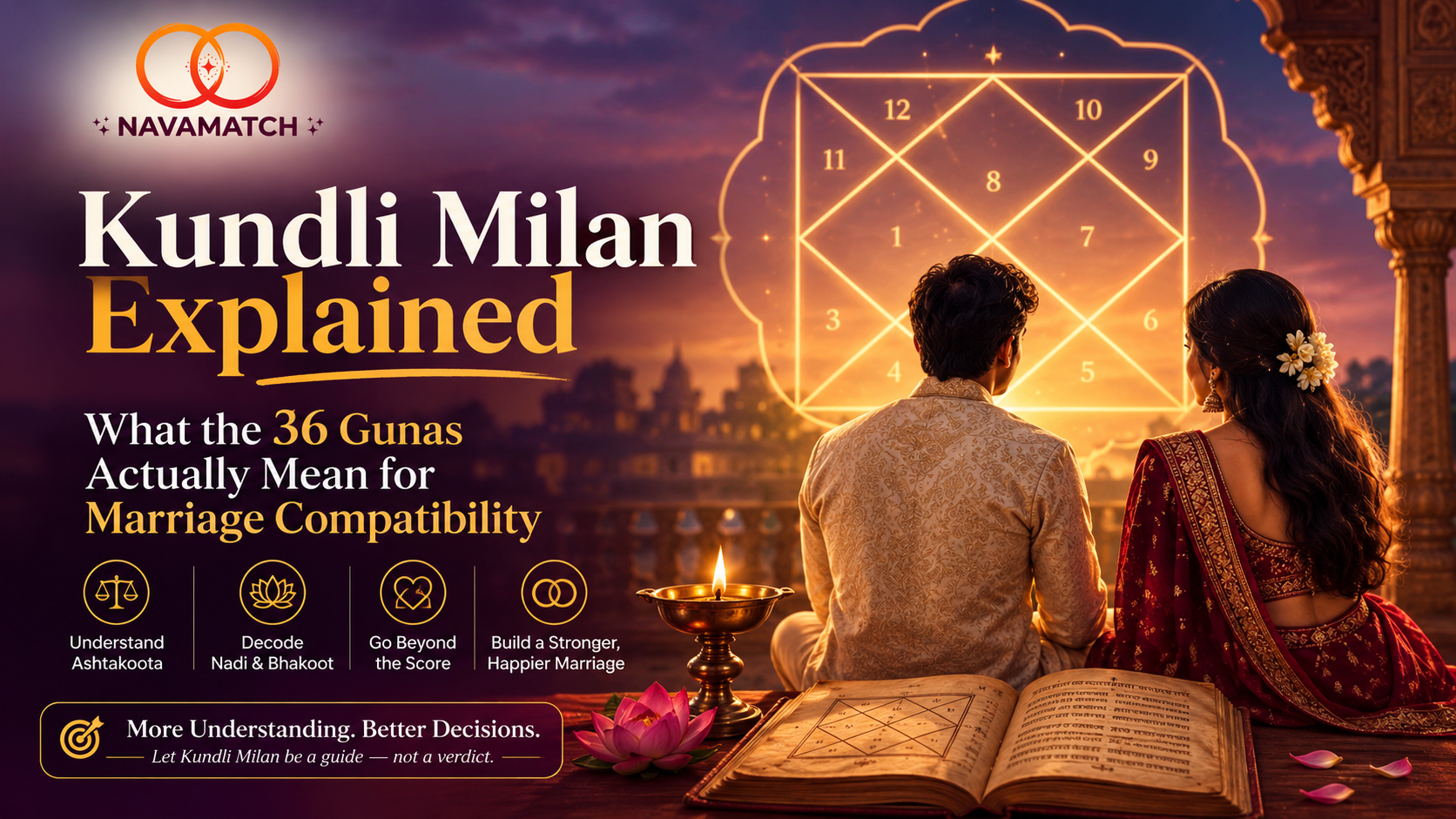
Kundli Milan Explained: What the 36 Gunas Actually Mean for Marriage Compatibility
Kundli Milan is more than a 36-point score. Learn how Ashtakoota matching works, what each Koota represents, why 18 Gunas is only a traditional benchmark, and what you should actually consider before making a marriage decision.